
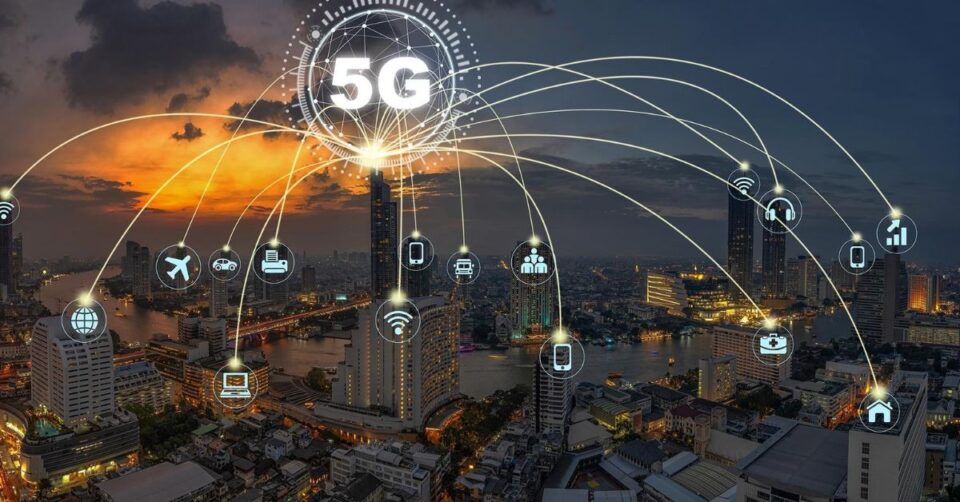
What Is 5G?
The words 5G and technology is an acronym that stands for the fifth generation wireless network system. It’s an evolution of 4G that offers faster speeds, lower latency and more capacity. In the United States this translates to more dependable mobile internet, more connected devices at one time and new services that were not previously possible.
You’re witnessing one of the real-world benefits of 5G: When you stream smooth, HD video live on your phone without buffering, or when you video-chat from a moving vehicle and stay connected in high-def resolution, the tide has shifted for truly faster networks (and everything that comes after). This is not just about smartphones becoming speedier; it is an entire industry tipping over.
What Is 5G Technology?
Going deeper 5G technology works in higher frequency bands (such as low mid and high spectrum bands), uses advanced antennas and can be used in a denser radio network (e.g. small cells) to provide faster speeds These are networks that will be able to support thousands of more devices at the same time will reduce latency down to milliseconds and will enable things like remote surgery smart cities autonomous vehicles etc. Here is a comparison table of 4G and 5G:
| Feature | 4G LTE | 5G Technology |
| Typical Download Speed | Tens of Mbps | A few hundred Mbps to multiple Gbps |
| Latency (Delay) | Around 30–50 ms | As low as 1–10 ms (where appropriate) |
| Device Capacity | Support for thousands/km² | Support for millions of devices/km² |
| Applications | Mobile web, streaming | IoT, AR/VR, autonomous systems |
With this push, the 5G network isn’t simply a faster version of your mobile data it becomes an infrastructure for new technologies.
How Does 5G Technology Work?
The 5G system is, at its most basic level, a radio access network (RAN) connected to a software‑defined core network that routes traffic through it by means of either fiber or, in some cases, wireless backhaul. The radio part is based on small cells that are attached to buildings or street furniture for the provision of high‑density coverage, in particular in urban areas. High‑frequency bands (millimetre‑wave) offer huge speed but for very short distances; lower bands travel much farther but more slowly. For example: Picture your smartphone chatting with a small cell antenna in the vicinity. That antenna plugs into fiber cable into the network core. Your video call rips across the cell from your phone, down fiber and then right back up to the receiver. Between you and the person with whom you’re speaking, this path is shortened, optimized and processed with minimal delay so when I want to see the other person I can do that with less of a visible lag.
When Did 5G Become Available and How Did It Expand?
Over in the U.S., 2019 was when major carriers started rolling out 5G. Deployment initially took place in highly demanded and traffic dense city areas. Urban amenities eventually spread to the suburbs and even rural areas. Investing in spectrum, regulatory approvals and deploying small‑cells all fuelled this growth.
As the network matured, midband spectrum (which delivers a balance between speed and coverage) began to be used more widely. The fact it could handle small cells and fiber‑backhaul also helped extend coverage. Today 5G can be found in many U.S. cities though rural coverage is still catching up.
What Was The Real World Impact of 5G Technology?
The real‑world applications of 5G are well underway. Healthcare services such as remote patient monitoring and tele‑medicine are more powerful with reduced latency and improved connectivity. In transportation, 5G networks also start to enable so-called connected vehicles and smart traffic systems. Manufacturing: “Smart factories” efficiently produce through sensors and real‑time data for optimisation using 5G‑enabled IoT. For example, a hospital could use 5G‑enhanced devices to transmit real‑time information to doctors miles away. One of the smart city’s possible uses of 5G is to connect traffic lights, cameras and sensors for dynamic flow control. The big revelation: 5G is not just for faster phone service, it’s an enabler of new kinds of systems.
Security Suites
The 5G-security ecosystem changes and shifts. The more gadgets there are, the more potential entry points for threats. Networks have become more software‑defined which brings with it fresh weaknesses. At the same time, 5G permits more robust encryption, network slicing(custom virtual networks) and real‑time traffic monitoring. The result is a mélange: more risk but also more capability.
U.S. IT companies deploying 5G should reconsider their endpoint protection, update mobile device policies and expect large quantities of connected devices to take on lowlatency-connected workloads. Security suites will need to address the needs of not only phones but also sensors and industrial IoT and edge‑computing nodes.
Featured Products Networking
In the product space you are seeing networking 5G solutions popping up. That includes routers and gateways that can connect to mmWave, small‑cell hardware, edge‑compute modules for ultra-low latency use-cases. Some distributors in the U.S. today sell 5G‑ready networking equipment that plugs into existing infrastructure and will support forthcoming 5G use‑cases.
Service providers and enterprises can objectively assess solutions based on factors like: support for sub‑6GHz and mmWave bands; compatibility with in-place fiber backhaul networks; readiness for edge deployment; and embedded security. These are the solutions which lend the infrastructure a muscle to ride the 5G wave.
Security
Although security in a 5G world gets very broader the deeper you dive. Data moves more quickly and through more nodes, so vectors for breach multiply. Similarly, network slicing meanwhile enables businesses to establish virtual networks separate from the public network and enhance isolation. Privacy regulation (e.g., U.S. federal and state regulations) is gaining momentum.
As all of life goes 5G‑driven, visibility becomes inevitable. With many more devices connected and much higher traffic volumes, companies need to watch networks constantly. Real-time analytics, anomaly detection, visibility into traffic flow All of these are mission-critical. For instance, it allows enterprise IT organizations to monitor data coming from edge devices, central network controllers and the cloud in order to have visibility into performance, security and user experience all important when using 5G technology for mission-critical apps.
Collaboration
5G’s part in working together is enormous. By being faster, and with lower latencies, real‑time video meetings become silky smooth, AR collaboration can occur between geographically distributed individuals making remote teams feel remotely co‑located. The work-hybridization trend in the U.S. has grown demand for strong collaboration tools even faster. High‑quality video conferencing, instant file sharing and immersive collaboration experiences are now possible on 5G which means that teams can stay productive regardless of their location.
Computing Networking
Bringing together computing and networking in 5G will entail an architecture that hinges on edge computing, software‑defined networking (SDN) and virtualization. 5G allows computing to be pushed closer to the user on the “edge” so that applications like real‑time analytics or AR can happen with less lag. In infrastructure, network and compute are conflating—network devices now house processing machinery and computing platforms need connectivity just as much as they require processor horsepower. For U.S. players getting the architecture correct (fiber + small cells + edge servers) becomes an advantage.
Computing
This transition brings about faster response and lower latency for data computation-intensive applications which were traditionally requiring high CAPEX infrastructure.
Security (Again)
Yes, we circle back to security because there’s plenty of complexity around enterprise adoption of 5G technology. 5G networks in contrast to previous generations are far more software-centric, virtualized and open. This has to include protecting the network core itself, as well as protecting your endpoints (phones, sensors and edge devices) and securing this data when it’s in motion or at rest. For U.S.-based companies, this requires following the guidance of bodies such as the Cybersecurity & Infrastructure Security Agency (CISA) and implementing best practices including network segmentation, regular audits, intrusion detection in a 5G-enabled world.
Empowering Your Infrastructure
If you’re an American business exec pondering how to get your outfit up to speed for 5G?, this section helps. First, take an inventory of your infrastructure; do you have fiber (not wireless backhaul), does your internal networking have the bandwidth for added device density, do you have edge‑computing capabilities? And then plan the upgrades: Erect small cells in spots with poor coverage, forge relationships with a carrier or MSP that offers network slicing and update your security and observability tools to handle traffic moving across the 5G access. More crucially, think of 5G less as gadget upgrade and more as an infrastructure upgrade: It remaps how connectivity, computation and data all converge.
Managed Services
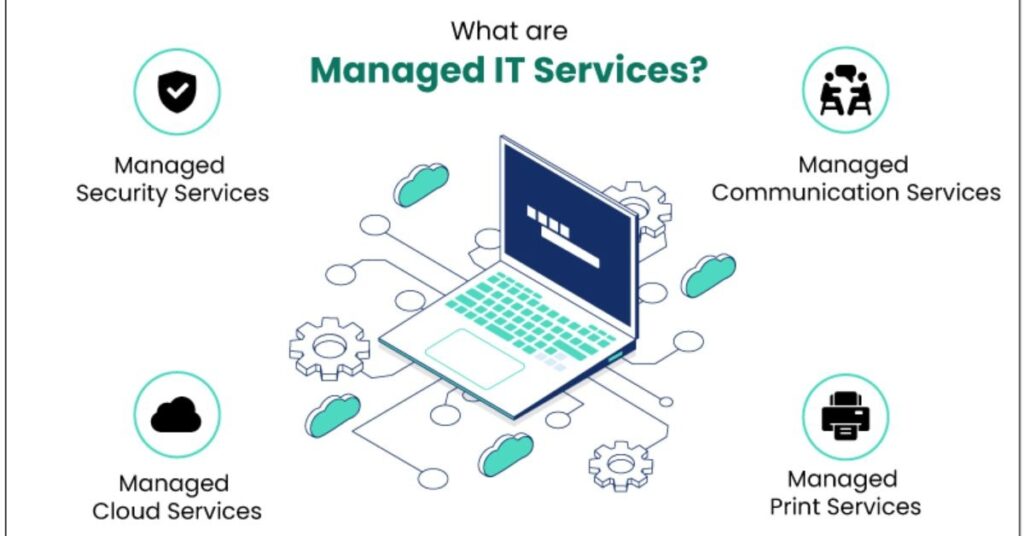
U.S.-based managed services firms are also coming to the aid of enterprises wanting to bring 5G in house with consulting, deployment, monitoring and security services created specifically for 5G. Hiring a reliable supplier allows you to not have to build everything in‑house . Instead you gain expertise around spectrum access, small‑cell deployment and knowledge of edge infrastructure network monitoring and compliance.
FAQs
Not exactly. 5G is different from Wi‑Fi. Many think that indoor will be dominated by Wi‑Fi and mobility (and wide area) with 5G. Many systems will use both.
mmWave is capable of very fast speeds but it doesn’t travel well and stands up poorly to obstacles. Sub‑6GHz is broader-reaching but slower in peaks. Both will have roles in 5G networks.
Conclusion
We are on the cusp of one of the greatest steps forward in connectivity we have ever known 5G technology. It’s not just faster internet, it makes possible new business models, smarter devices, real‑time systems and frequently significant productivity increases. For American readers, regardless of whether you’re a consumer or an IT pro or business executive reading up on 5G now is only going to give you a leg up.
